Inside Toronto’s Most Intimate Japanese Izakaya
Inside Toronto’s Most Intimate Japanese Izakaya
The Art of the Neighborhood Joint
Shori Imanishi and Daisuke Gomyo started with a popular local pop-up. When they transitioned into a permanent location at 1330 Dundas St W, they bypassed the typical checklist of high-end restaurant design. They did not hire a commercial firm to manufacture an aesthetic. They also refused to chase the minimalist, hyper-polished look dominating modern dining. Instead, they gutted a former Portuguese sports bar and built a room entirely out of their own personal histories. They combined a shared love for Tokyo listening bars with a desire to elevate the casual Japanese izakaya experience in Toronto.
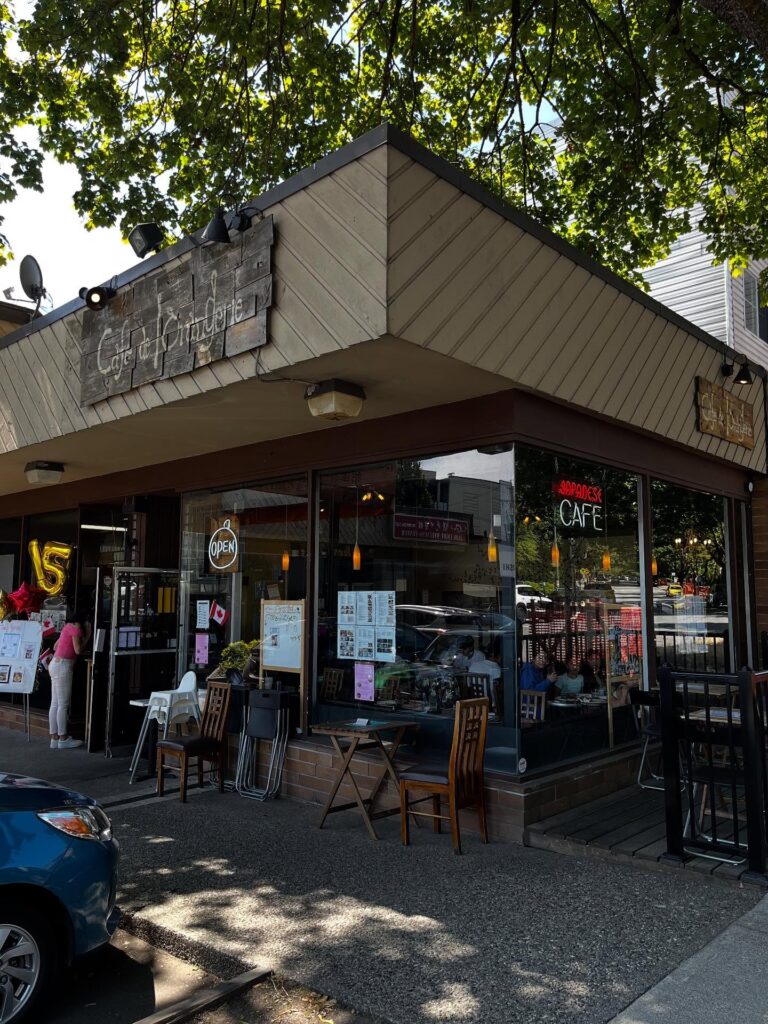
The physical facade reflects this unstudied approach. The exterior sign still bears the “Cafe Regional Bar & Grill” lettering left behind by the previous tenant. Only a tiny vinyl print on the glass window reveals the new kitchen. This hand-off from the old building to the new team sets the tone for everything inside. Imanishi works because it represents a direct translation of what the duo experiences when they travel, cook, and listen to music. The interior serves as a literal package of the food they eat, the records they spin, and the textures they collect.
Lighting, City Pop, and Vinyl
The room operates on a specific sensory balance. The owners engineered this environment to make guests feel immediately comfortable. Shori Imanishi emphasizes that a great space relies on the cumulative effect of subtle details. He focuses on the lighting, the air temperature, the seating, and crucially, the acoustic environment.
The Low-Light Oasis
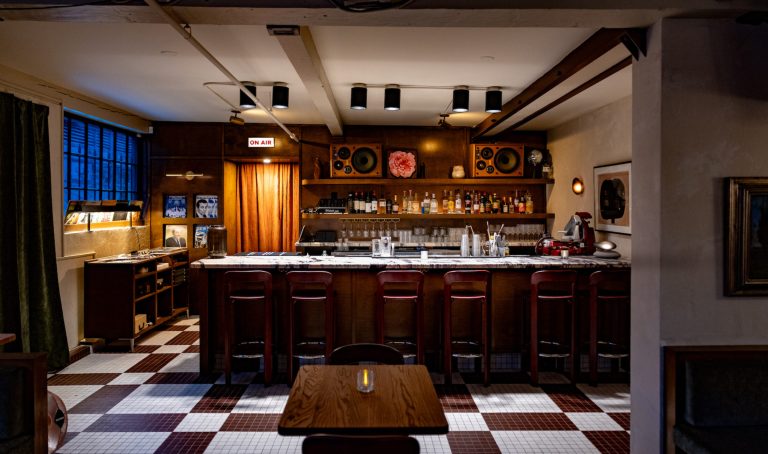
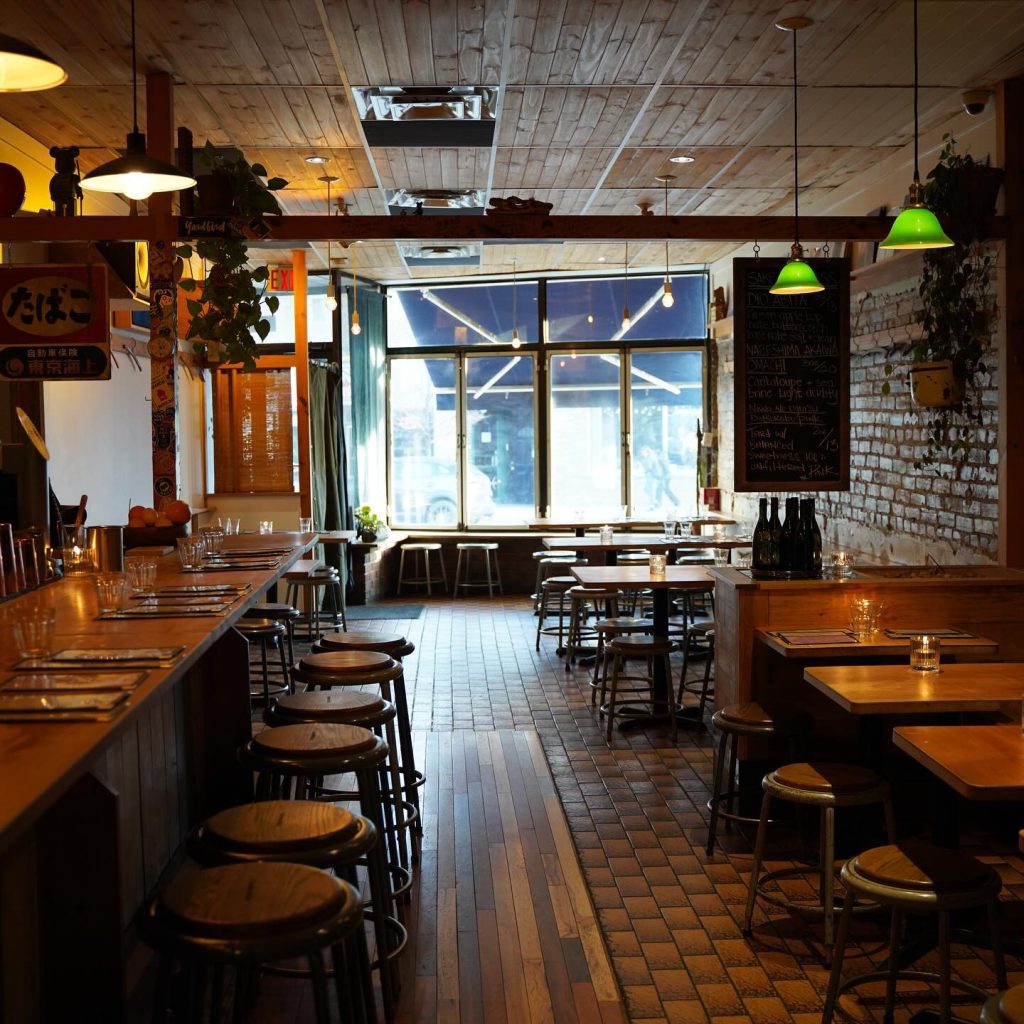
The room relies almost entirely on low-hanging, warm amber bulbs. By eliminating bright overhead lighting, the space creates immediate pockets of privacy. Even on a weekend night, the room fills to capacity and conversations bounce off the walls. The dimness casts a protective canopy over individual tables anyway. This choice cultivates a relaxed environment where guests can drop their guard completely.
The Auditory Architecture
Sound forms the actual backbone of the room’s layout. Imanishi heavily invested in a custom audio setup. He anchored the space with a vintage McIntosh tube amplifier. Audio specialist Robert Squire helped design the high-end sound system. To keep sound waves from ricocheting harshly off the hard surfaces, the owners installed custom sound-absorbing panels alongside the original exposed brick walls.
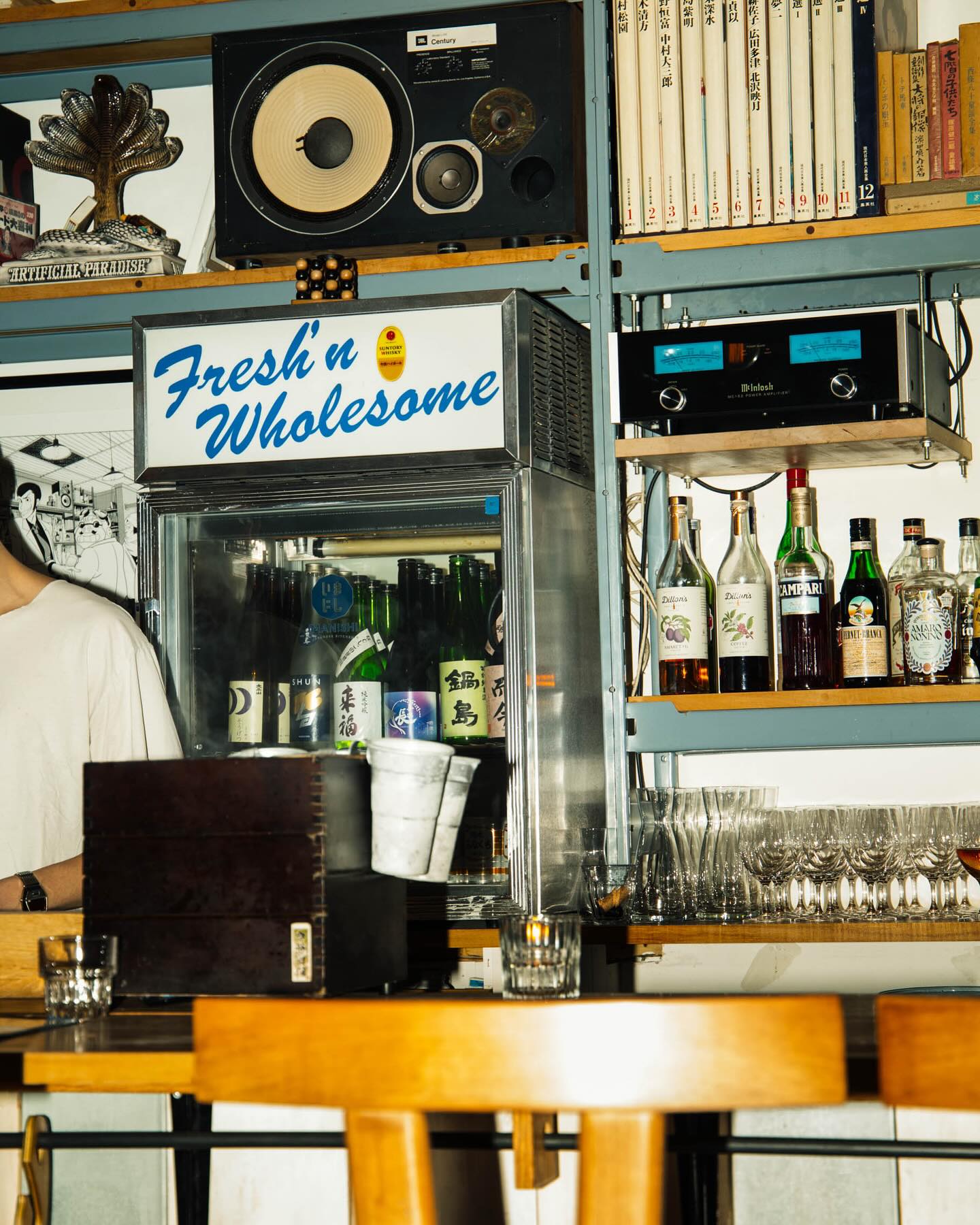
This acoustic engineering allows them to play vintage 1970s and 80s Japanese City Pop at a prominent volume. Yet, diners never have to shout over their meals. The crisp, warm analog tracks act as a continuous heartbeat for the dining room. They directly connect the atmosphere of this Toronto storefront to Tokyo’s late-night listening bars.
Lived-In Materiality
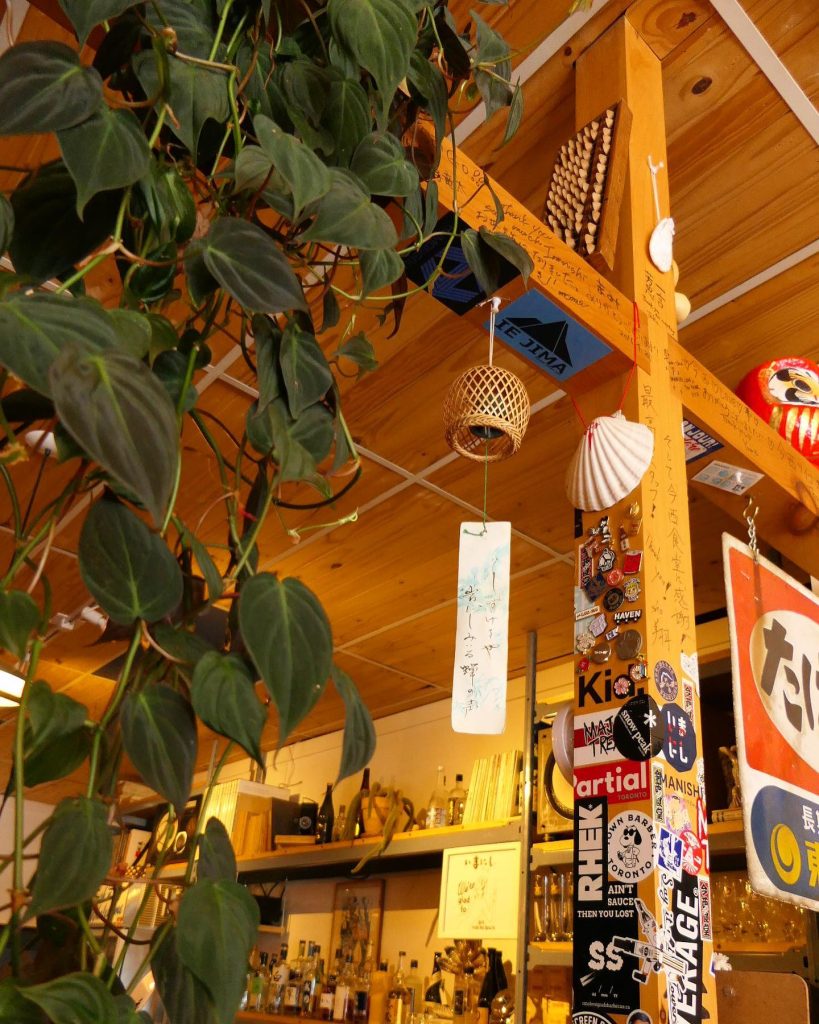
The physical design focuses on unpretentious, tactile materials that tell a story. Instead of sterile, modern fixtures, the walls feature 1970s-era Japanese beer signage and old curry canisters. Shelves line the room with vintage manga and album covers. Along the ledges of the raw brick walls, custom coat hangers made from weathered skateboard decks provide practical utility. The entire space looks and feels like it was accumulated over a lifetime of traveling between Vancouver and Japan. It entirely bypasses the sterile feel of a corporate rollout.
The Shared Table: Tokyo Homestyle Cooking
The Izakaya Dining Rhythm
The kitchen team works out of a tight, open footprint behind a heavy wooden bar. Because space is limited, the menu drops formal, multi-course structures altogether. As a proper Japanese izakaya, the kitchen sends dishes out the moment they hit peak temperature. This style transforms the meal into a fluid, shared experience. The menu avoids complex fusion tropes. Instead, it focuses on the daily comfort foods the owners ate during their years spent cooking in Japan. It also reflects their time working in foundational Toronto spots like Guu and Kingyo.
Crispy and Savory Classics

The Corn Kakiage remains the anchor of the table. The kitchen suspends sweet corn kernels in a light, salted tempura batter before frying them into erratic clusters. They arrive shatteringly crisp on the outside. Meanwhile, the interior kernels burst with hot sweetness. This texture strikes a perfect balance with the flakes of sea salt dusted over the top.
For the Nagoya-Style Chicken Wings (Tebasaki), Imanishi replicates a recipe from a restaurant where he used to work in Nagoya. The cooks fry the wings until the skin forms a brittle crackle. Then, they glaze them in a sticky garlic-ginger-soy reduction. They finish the dish with a heavy layer of black pepper and sesame seeds. The food demands a complete lack of pretense. You have to abandon your utensils and eat them with your hands.
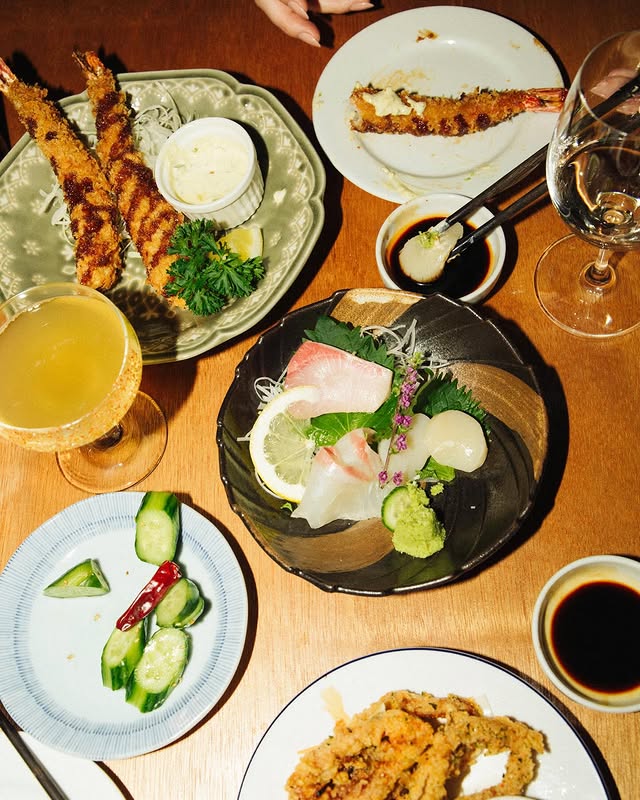
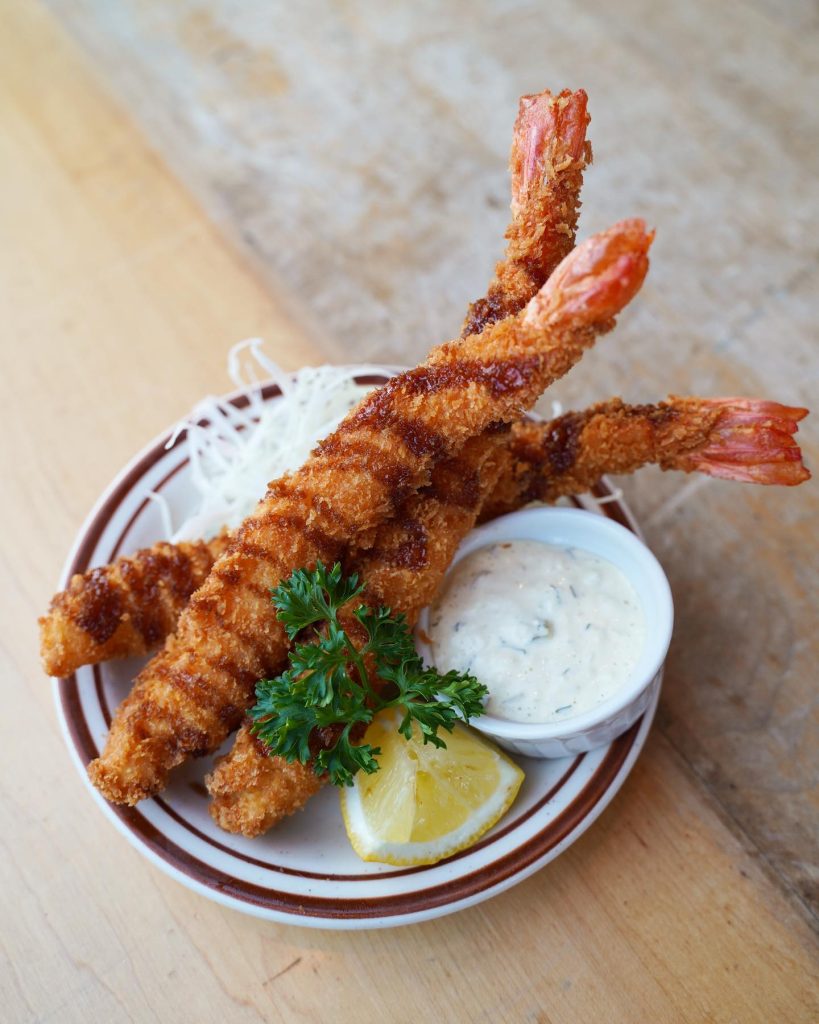
The Ebi Fry offers a direct nod to yoshoku—Japanese Western-style comfort food. The kitchen takes jumbo black tiger prawns and coats them in a thick layer of coarse panko crumbs. They fry them to a uniform, golden crunch. A rich, tangy house-made tartar sauce cuts beautifully through the heavy crunch of the crust.
Refreshing Balances and Sweet Finales
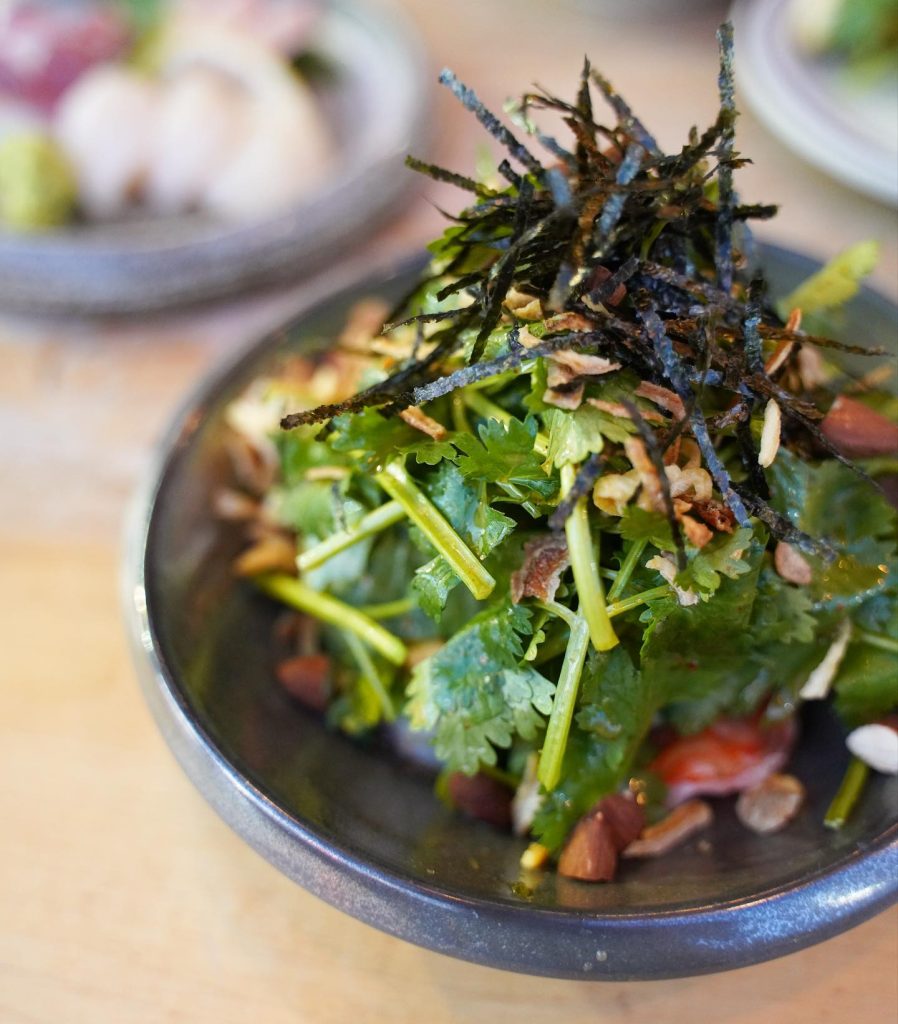
To balance out the fried courses, the Prawn & Cilantro Salad delivers essential sharpness. The kitchen tosses plump prawns, cold cucumber slices, fresh cilantro, and crispy shallots together. A savory fish sauce dressing with underlying notes of toasted nori coats the entire mix.
To wash down the meal, skip the standard options. Order a Yuzu-Hi or their house Yuzu Lemonade instead. The tart, aggressive carbonation cuts right through the richness of the wings and tempura.
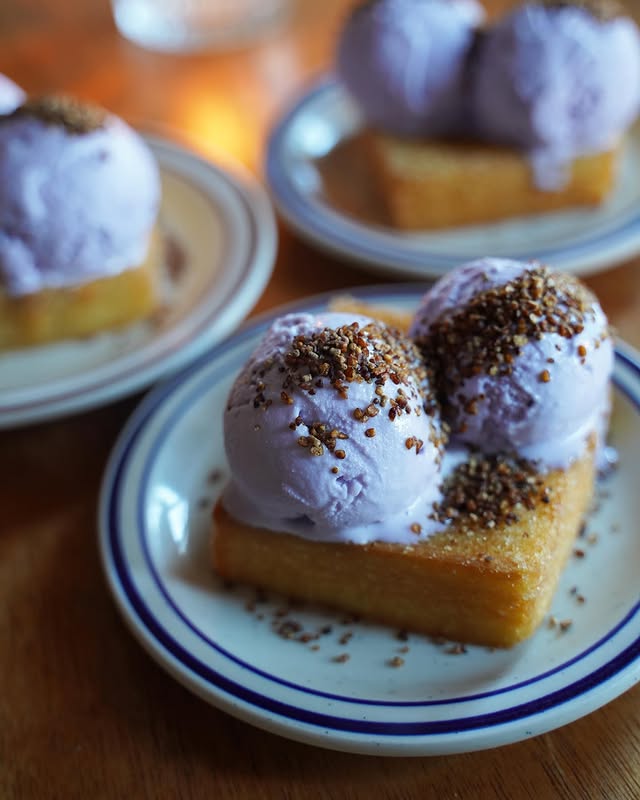
Do not leave the building without ordering the Tokyo Toast. The kitchen takes a massive, thick-cut slab of Japanese milk bread (shokupan). They coat the bread in sugar and deep-fry it. This process creates a hard, caramelized outer shell. Meanwhile, the interior retains a light, pillowy texture. A melting scoop of vanilla ice cream and a scattering of toasted, smoky soba grains complete the dessert.
The Verdict
Imanishi thrives because it treats restaurant design as a holistic, human-scale experience. It rejects the idea of a simple visual branding exercise. Shori Imanishi and Daisuke Gomyo focused on high-quality analog sound, low-slung lighting, and authentic Tokyo comfort food. Through these elements, they built a space that functions as a genuine sanctuary on Dundas West.
Competitors can easily reverse-engineer a menu. They can also buy vintage lighting fixtures. However, they cannot easily replicate the lived-in, late-night energy generated here. The team simply shares the music, food, and culture they love. It remains a definitive blueprint for how a standout Japanese izakaya can make Toronto feel a little more intimate, one vinyl record at a time.