
Purchasing a presale home remains one of the most complex financial decisions a buyer will make in their lifetime. To make this commitment, a purchaser must evaluate a future home, an emerging neighbourhood, shifting market conditions, and the developer’s track record. Over decades, the Canadian presale industry has built sophisticated tools to guide this process. Developers use a presale marketing strategy that includes presentation centres to bring a project’s vision to life, alongside release strategies, broker engagement, targeted advertising, and brand storytelling to build momentum around a potential purchase.
In previous market cycles, buyers maintained high confidence in the traditional value equation, trusting that a price secured early in a campaign would appreciate by completion. While current marketing and sales programs still perform vital work, developers originally built them around a short conversion window. These foundational tactics simply did not account for the longer path to purchase and the complex market dynamics that developers face today. Buyers now take longer to reach a decision, which creates a distinct opportunity for developers. Instead of replacing proven tactics, teams can enhance them by using existing data more effectively, personalizing messages for each stage of consideration, and mastering the way buyers search, compare, return, and build confidence over time.
The Buyer Journey Is More Visible Now
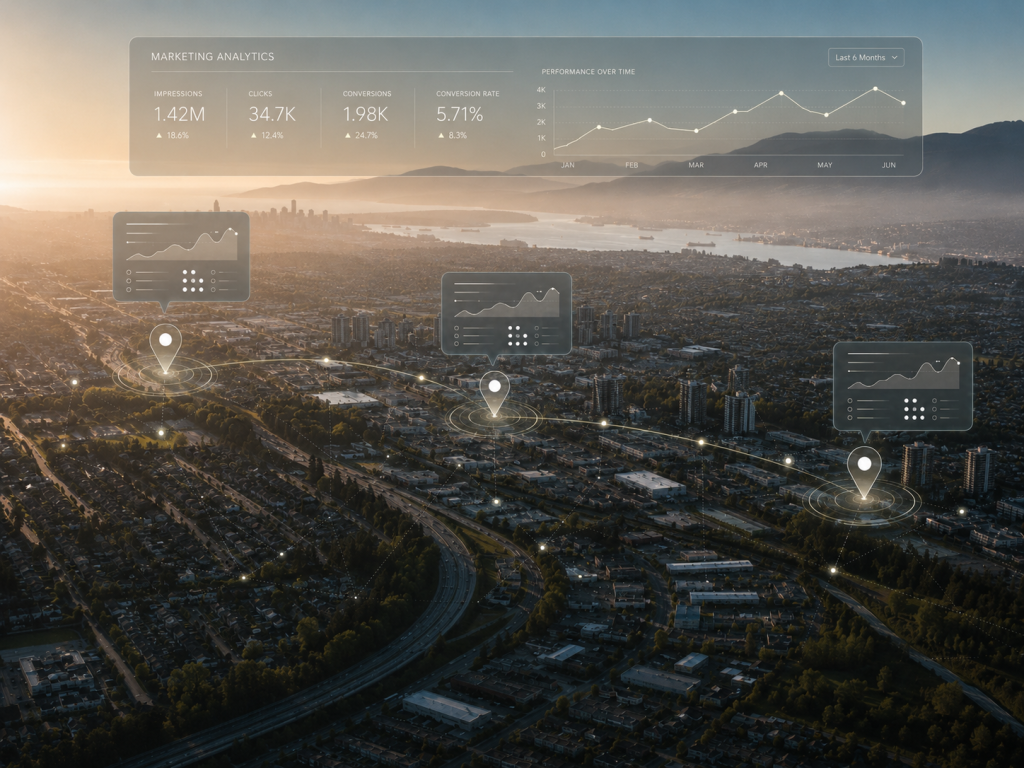
No one in the industry needs a reminder that the market has changed significantly over the past several years. Sales cycles take longer, but developers can track the buyer journey much more easily than before. Interest builds, stalls, returns, fades, and strengthens across multiple touchpoints long before a buyer ever enters a presentation centre. While an isolated click reveals very little and a single email open rarely signals a ready buyer, clear patterns emerge over time to tell a coherent story.
Buyers Rarely Arrive at the Beginning
Before a prospect ever walks into a presentation centre, they have usually encountered the project’s brand across multiple platforms. They have already compared floorplans, watched highlight reels, explored neighbourhood amenities, reviewed competing developments, and read online forum discussions on platforms like Reddit.
A prospect who just discovered a project views it through a completely different lens than a buyer who has studied the same floorplan for six months. The same rule applies to different buyer profiles. A future homeowner tries to picture daily life in a new community, while an investor weighs rental demand, resale potential, and long-term value. Both buyers maintain interest, but they require entirely different reassurances.
Anyone who has managed a presentation centre knows that a registration form rarely tells the whole story. It merely logs the exact moment a buyer chose to identify themselves, not the moment they actually became interested in the project. Those two actions represent completely different data points, yet many follow-up strategies still treat them as identical events.
The Real Question: Gauging Intent
For most projects, database size is not the issue; systems already contain plenty of interested prospects. Instead, the gap lies in the quality of the information teams collect and how effectively that data reveals a prospect’s position in the decision-making process. Two potential buyers can look identical on a spreadsheet while standing miles apart in the sales cycle.
The real opportunity lies in identifying which specific data points signal a prospect’s current phase, whether they occupy the awareness, discovery, evaluation, consideration, or purchase stage. Once teams uncover these signals, they can deliver highly personalized outreach. A campaign that runs unchanged for three or more months relies on an outdated presale model; it falsely assumes that a single message will retain its effectiveness as a buyer moves in and out of the consideration phase. In a longer, less linear market, the conversation must adapt as interest builds, stalls, and returns.
Most organizations already possess the marketing infrastructure required to personalize these conversations, though they predominantly use it in other industries. This infrastructure spans campaign data, CRM history, website behavior, and email engagement. In many cases, teams hold more information than they can actually deploy. Savvy developers use this data intentionally, ensuring that every email, call, or text message accurately reflects the buyer’s immediate mindset.
AI Is Reshaping How Buyers Discover Projects
Buyers still do their homework, but they increasingly conduct their research in digital spaces where a project may or may not surface.
AI search engines generate direct answers to highly specific questions. When a buyer asks an AI platform about presale developments in a specific Metro Vancouver neighbourhood, the system delivers a response that either includes your project or completely omits it. AI search has no page two.
Consequently, developers need a content infrastructure audit rather than a traditional SEO audit. AI models read reviews, project updates, floorplans, and digital layouts in an entirely new way. Most developer websites and project landing pages cater to a traditional search environment that is quickly disappearing. Marketing campaigns must still serve traditional search engines, but they must also optimize for the way buyers find answers across AI systems and alternative digital sources.
Building a Presale Marketing Strategy for the Next Market Shift
Marketing cannot fix affordability, inventory levels, or interest rates. However, a slower market does grant developers the time to build sophisticated marketing engines that previous cycles rarely allowed. Today’s technology provides tools that did not exist in earlier downturns, giving teams the ability to read buyer readiness, respond with personalized messaging, and stay relevant throughout a longer decision window.
None of this replaces the fundamentals. Projects must remain viable, clearly positioned, and backed by a sales team that can hold a buyer’s attention over an extended timeline. The developers who build these modern marketing systems today will gain a massive head start when the market inevitably shifts.
Learn more about the future of real estate:
How Master-planned Third Places Are Rewriting Condo Design