The History of Toronto’s Two Chinatowns
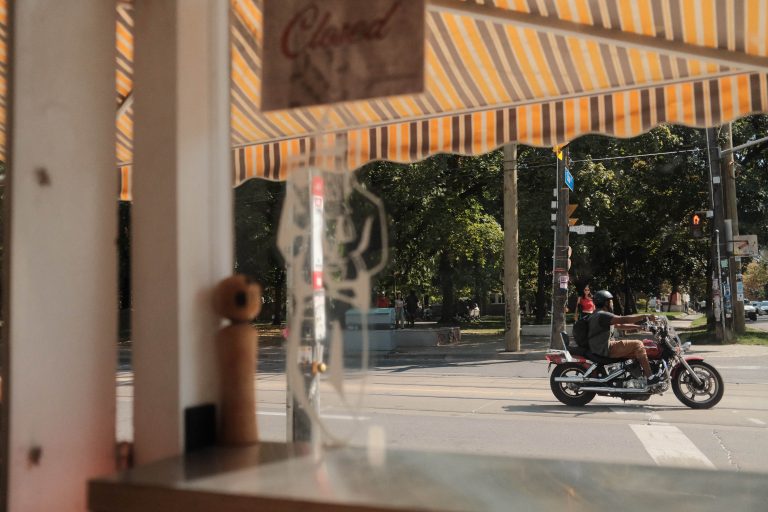
The History of Toronto’s Two Chinatowns
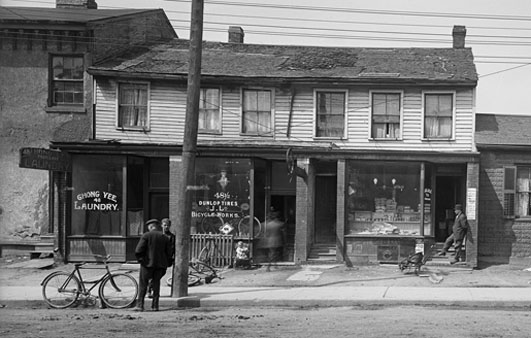
Toronto is a city of layers. If you stand at the corner of Bay and Queen today, you see the soaring white arches of New City Hall and the concrete expanse of Nathan Phillips Square. But beneath that concrete lies a ghost. To truly understand Toronto Chinatown history, you must look beneath the pavement of “The Ward”, the birthplace of Toronto’s first Chinatown.
Today, the city’s Chinese heart beats in two distinct places: the bustling commercial titan of West Chinatown (Spadina) and the quiet, residential “local secret” of East Chinatown (Gerrard). To understand Toronto, you must understand why the community moved, how it survived, and what makes these two neighborhoods so different.
The Ghost of the Ward: A Community Displaced
The story begins in 1878. A pioneer named Sam Ching opened a laundry (what we’d call a laundromat today) at 9 Adelaide Street East, marking the first recorded Chinese business in the city. By the 1920s, a vibrant community flourished along Elizabeth and Chestnut Streets. According to records from Simon Fraser University, this “Old Chinatown” became a refuge for immigrants navigating the era of the Chinese Exclusion Act, housing everything from opera houses to clan associations.
However, the 1950s brought the wrecking ball. The city expropriated the land to build a new civic center. Despite the efforts of activists like Jean Lumb, who formed the “Save Chinatown Committee,” nearly two-thirds of the neighborhood vanished to make way for the modern skyline we see today.
West Chinatown: The Spadina Titan
As the city demolished Old Chinatown, residents and business owners looked westward. They found a new home in the Spadina Avenue garment district, a neighborhood then transitioning as the Jewish community moved toward the suburbs.
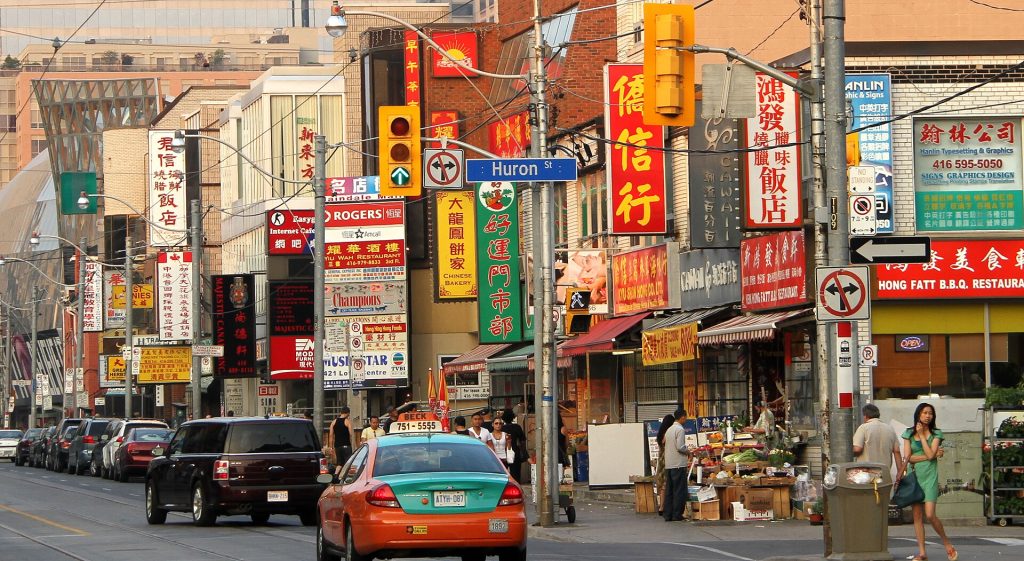
The Energy of Spadina
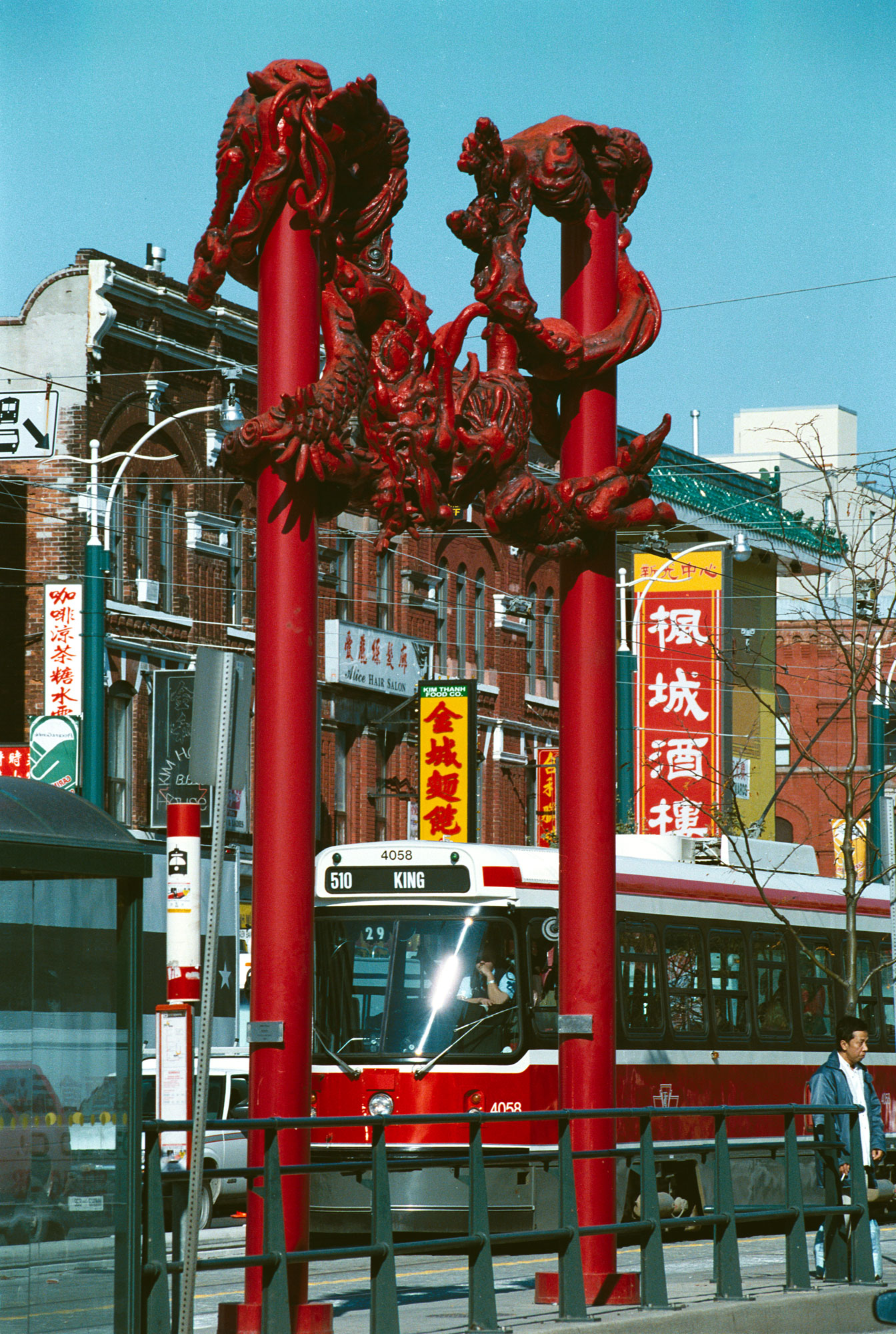
Today, West Chinatown is an unapologetic sensory explosion. It’s the commercial powerhouse of the community. Here, the active sound of the city never stops: streetcars clang through the intersection of Spadina and Dundas, street vendors hawk lychees from stacked crates, and the scent of roasted duck wafts from windows. In the late 70s, the city designated this area as a neighborhood of “Special Identity,” protecting its unique architectural motif and split-level storefronts.
Must-Visit Spots:
- Rol San: A legendary institution for all-day dim sum. It represents the “no-frills” excellence that defines the area.
- Dragon City Mall: This vertical shopping hub captures the 1990s boom, housing everything from herbalists to traditional boutiques.
- Grange Park: Just east of the hustle, this park offers a quiet view of the back of the Art Gallery of Ontario, sitting on the edge of the residential streets where families first settled after leaving the Ward.
East Chinatown: The Hidden Gem of the Don Valley
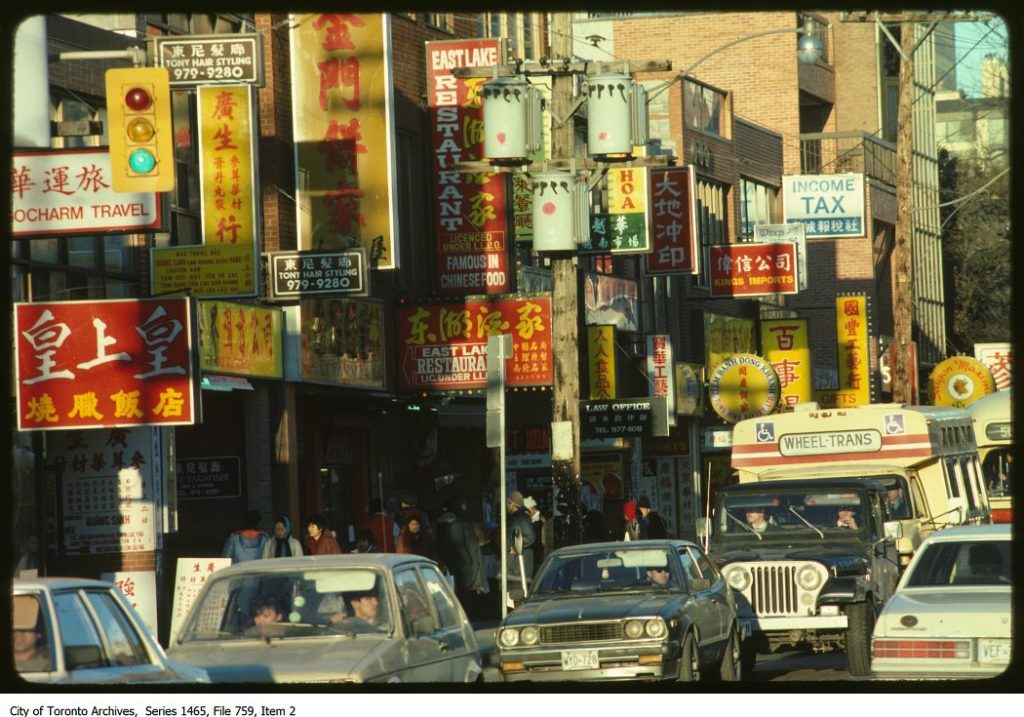
By the early 1970s, the success of Spadina created a new problem: high property taxes and overcrowding. Seeking a more affordable life, a new wave of pioneers, many from Hong Kong and Vietnam, crossed the Don Valley into Riverdale.
In 1971, Charles Cheung opened the Charlie Meat Store (Hung Kee) at Broadview and Gerrard. He planted a flag in a neighborhood of Victorian rowhouses and white working-class families. Soon, others followed, drawn by the lower rents and the sprawling greenery of Riverdale Park. As noted in Now Toronto, this area remains a vital, though rapidly changing, cultural anchor.
The Vibe of the East
If Spadina is for the tourists and the high-octane shoppers, East Chinatown is for the locals. It feels like a neighborhood kitchen. The pace slows down here. You see elderly residents playing mahjong and neighbors chatting in Cantonese at the local bakery.
Must-Visit Spots:
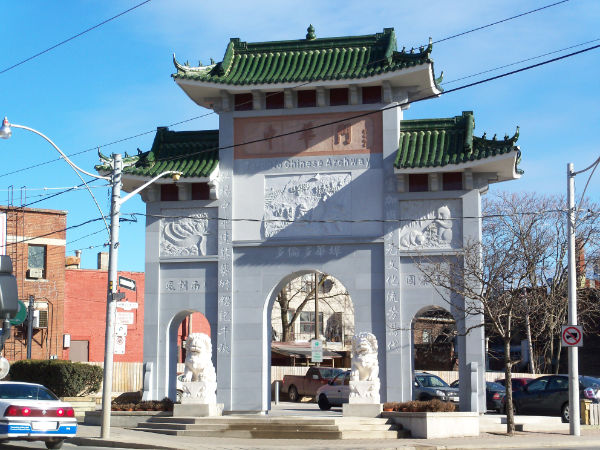
- Zhong Hua Men Archway: An intricate gate that stands as a symbol of community pride, funded by the local business association in 2009.
- Wok & Roast Chinese BBQ: Some of the best Cantonese BBQ in the east end, they’re known for its perfect crispy pork belly and succulent roast duck, it captures the soulful, no-nonsense culinary tradition of the neighborhood.
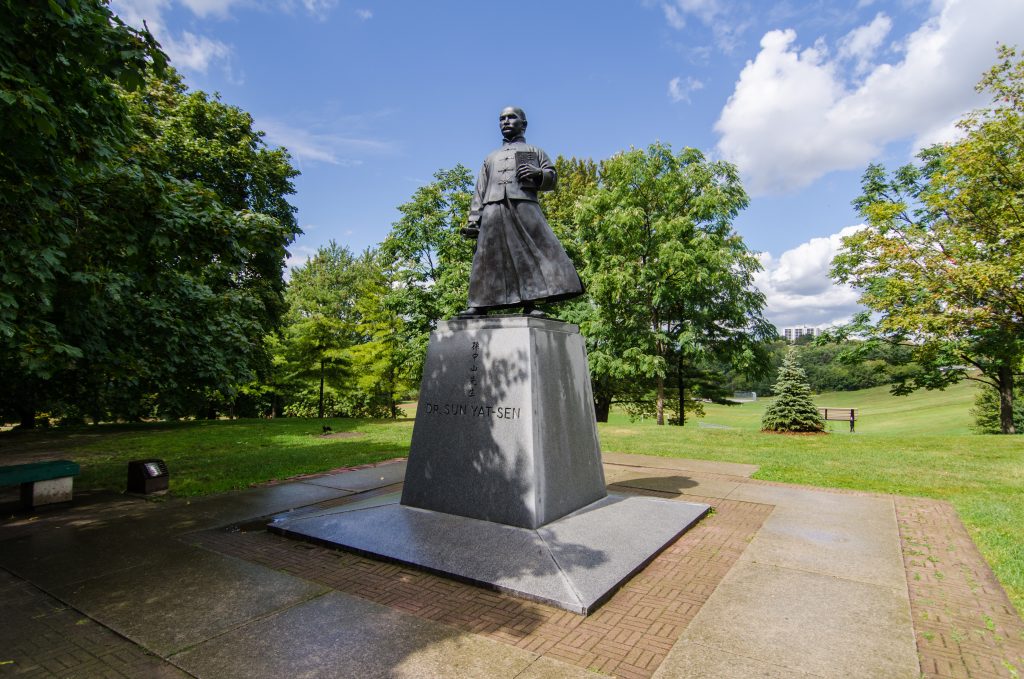
- Riverdale Park East: Walk up the hill to see the statue of Dr. Sun Yat-Sen. From here, you get the best view of the Toronto skyline, a reminder of the community’s journey from the shadows of City Hall to the heights of the East.
Two Paths, One Legacy
The history of Toronto’s Chinatowns tell a story of constant adaptation. From the 1919 riots to the demolition of the 1950s, the community faced systemic hurdles with a quiet, industrious persistence.
Today, the “divide” isn’t a wall, but a bridge. West Chinatown shows the world what the community has built, while East Chinatown preserves the way the community lives. Whether you find yourself under the neon lights of Spadina or the stone archway of Gerrard, you are walking through a living history of Toronto’s resilience.