Stanley Park



Stanley Park
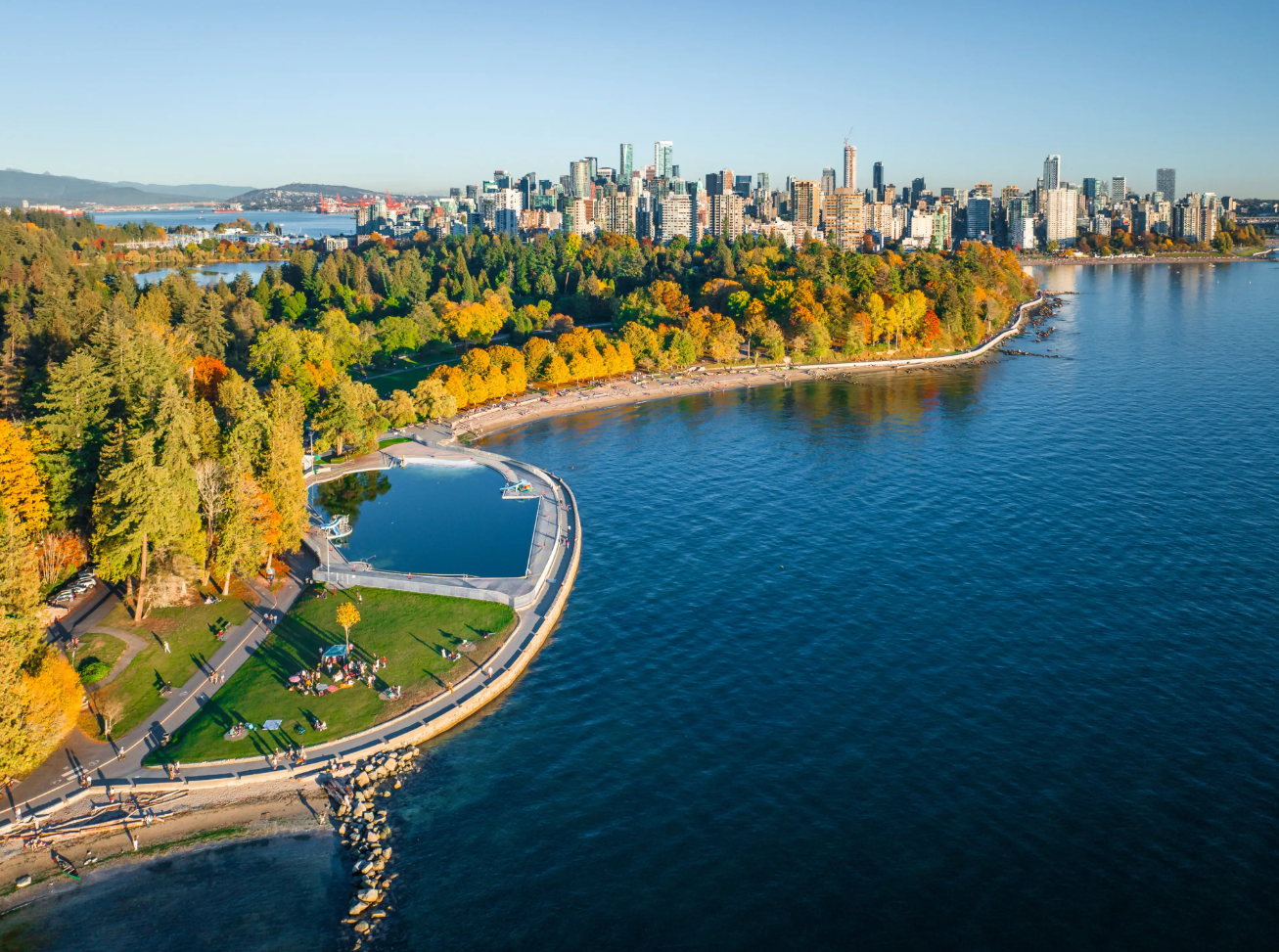
Stanley Park occupies a peninsula at the edge of downtown Vancouver where dense coastal forest meets the waters of Burrard Inlet and English Bay. Covering more than 400 hectares, the park protects one of the largest urban green spaces in North America, with towering cedar, hemlock, and Douglas fir trees rising above a network of trails and shoreline paths.
The interior of the park feels surprisingly wild considering its location. Forest trails wind through thick stands of old trees, where moss blankets fallen logs and filtered light reaches the forest floor. The atmosphere changes quickly once inside the canopy. Traffic noise fades and the trails take on the quiet character of coastal rainforest.
Encircling the park is Vancouver’s famous seawall, a continuous waterfront path that traces the rocky shoreline for nearly ten kilometres. Walkers and cyclists move along the edge of the water while passing views of the North Shore mountains, Lions Gate Bridge, and the open horizon of English Bay. At points along the route, beaches such as Third Beach and Second Beach offer places to step down to the sand and watch the tides move through the bay.
The park also carries deep cultural history. Stanley Park sits within the traditional territories of the Musqueam Indian Band, Squamish Nation, and Tsleil-Waututh Nation, whose presence along this coastline stretches back thousands of years.
Stanley Park stands apart because of its scale and variety. Within a single landscape visitors can walk through dense rainforest, follow a dramatic oceanfront path, or pause on a quiet beach looking out toward the mountains. Few cities offer such a large and immersive natural space directly beside their downtown core.