Cates Park (Whey-Ah-Wichen)

Cates Park (Whey-Ah-Wichen)
Cates Park, known in the Squamish language as Whey-Ah-Wichen, stretches along a broad arc of shoreline on the eastern edge of North Vancouver. The name translates to “faces the wind,” a reference to the way the open inlet channels ocean air across the beach and forested slopes behind it. The park holds deep cultural significance for the Tsleil‑Waututh Nation. This Nation’s traditional territory includes this part of Burrard Inlet as well.
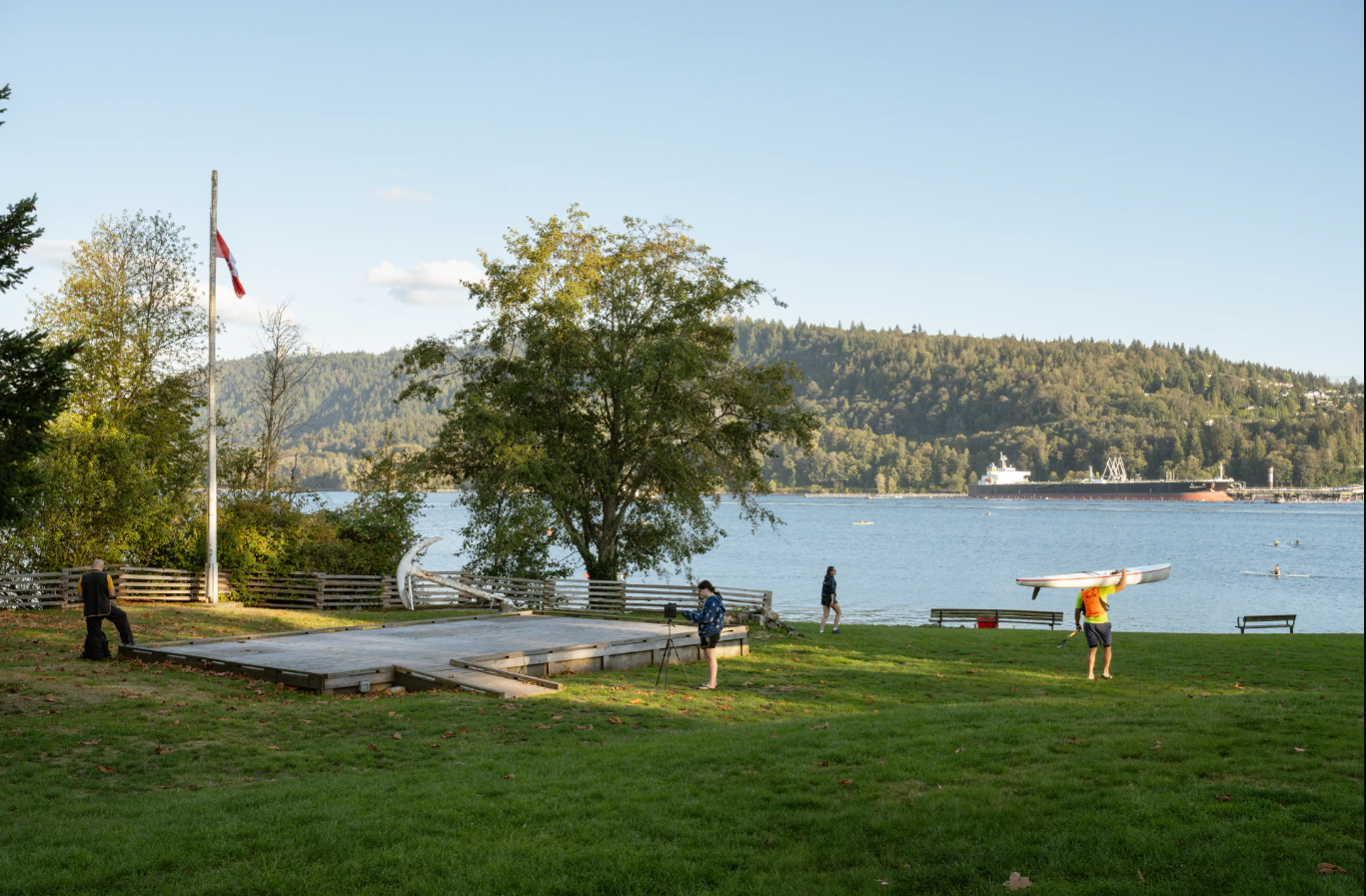
The landscape combines shoreline, forest, and open meadow in a way that feels expansive compared with many urban parks. A long driftwood beach follows the curve of the inlet, offering unobstructed views toward the forested slopes of Indian Arm and the distant peaks beyond. Moreover, logs scattered along the shoreline create natural seating where visitors often pause to watch kayaks, sailboats, and passing ferries move across the water.
Behind the beach, a forest trail winds through tall Douglas fir and cedar trees. It links several small coves and viewpoints along the water’s edge. The path remains mostly flat and accessible. Therefore, it is well suited for relaxed walks rather than strenuous hiking. Sunlight filters through the canopy before opening again at the shoreline. Here, the ocean and mountains come back into view.
Cates Park also carries a strong connection to traditional canoe culture. The park serves as a launch point for the Takaya Tours. There, visitors can paddle traditional ocean going canoes while learning about the history and stewardship of the Tsleil-Waututh people. This cultural presence gives the park a dimension that extends beyond scenery alone.
Throughout the day, the park fills with a mix of activities. Families gather near the picnic areas, kayakers push off from the beach, and walkers follow the shoreline path beneath the trees. Yet the space retains a sense of openness thanks to its long waterfront and the wide views across Burrard Inlet.
Cates Park stands apart for this combination of cultural history and coastal landscape. The forest meets the sea in a way that invites both reflection and activity. All this takes place within a setting that remains closely connected to the traditions of the Tsleil-Waututh Nation.